
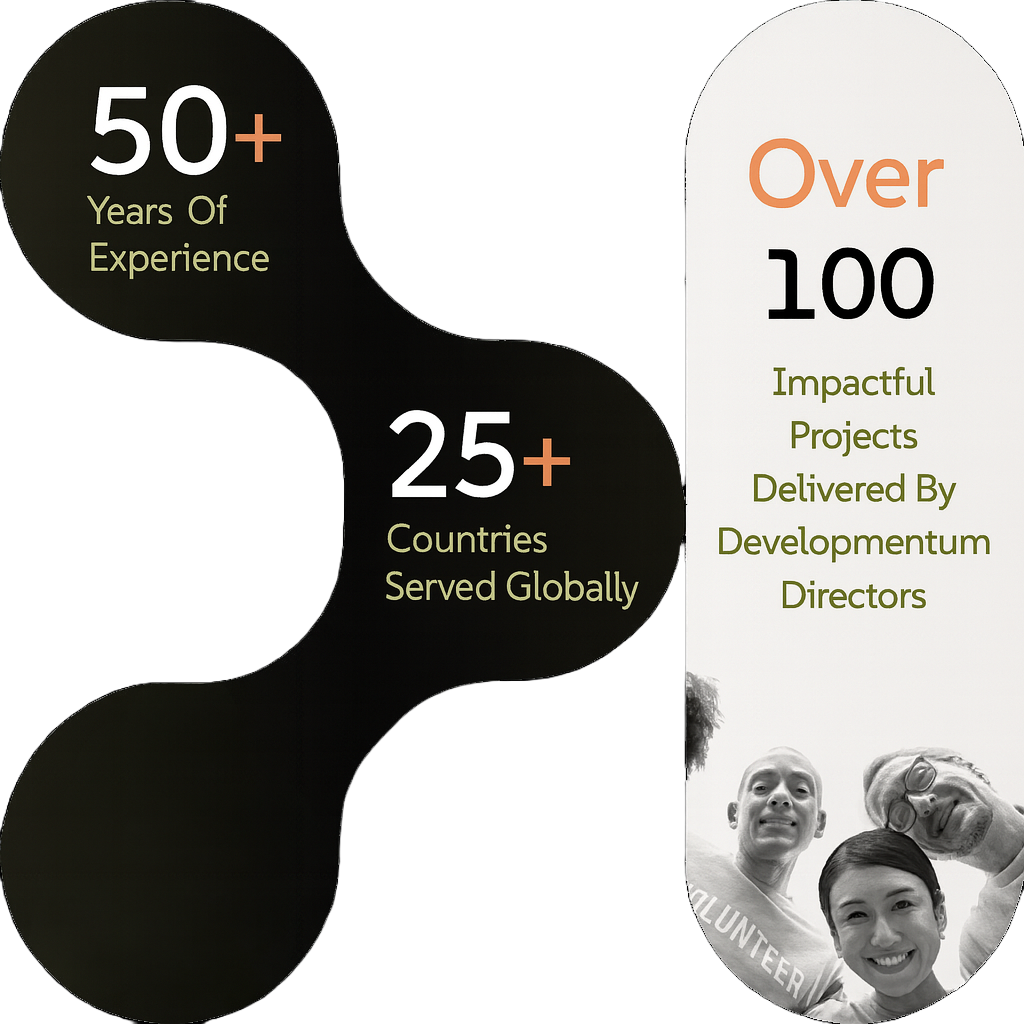
We’ve managed projects in more than 15 countries over the past 50 years, bringing together global expertise to tackle crime, conflict, and inequality, and to prepare societies for future shocks. Our work bridges local context and international accountability to drive real, sustainable change
Work With Us
In Afghanistan, our work has centred on supporting governance and crisis preparedness in an environment of chronic fragility. Developmentum’s Directors have been engaged in Afghanistan over many years through extensive public administration reform programmes, working to strengthen the capacity of government institutions to deliver services under pressure. Building on this foundation, and in partnership with the World Bank, we have consulted government counterparts, local businesses, and community stakeholders to better understand the crisis management mechanisms already in place.
Afghanistan faces acute risks ranging from earthquakes and droughts to chronic food shortages and economic instability, each capable of deepening humanitarian needs and undermining state legitimacy. Our approach builds upon existing resources and practices, aligning them with the World Bank’s framework for fragile states. This ensures that Afghanistan develops mechanisms for preparedness and response that are not only effective in the short term, but also sustainable, locally owned, and integrated into broader state-building efforts.
In Armenia, our research has focused on understanding the evolving landscape of cybercrime and its links to broader governance challenges. Using a mix of open-source intelligence, commercial cyberthreat analysis, restricted-access sources, FIMI analysis, and secondary literature, we mapped the main cybercrime typologies affecting Armenia and examined the criminogenic factors likely to drive the emergence of more sophisticated cyber threats in future. This included analysis of the role of the Russian state as an external actor, and its interactions with local criminal organisations and networks.
Alongside this, we are conducting research in Armenia, Kazakhstan, and Kyrgyzstan on the barriers to implementing sanctions regimes, helping to identify vulnerabilities in governance systems and opportunities for strengthening compliance mechanisms. Together, these strands of work provide insights into how cyber-enabled crime and sanctions evasion risks intersect in fragile governance environments.
In Azerbaijan, Our research has mapped the country’s cybercrime typologies, using open-source intelligence, commercial threat data, and restricted-access information. We assessed how criminogenic factors, ranging from corruption to weak institutional oversight, shape the development of cyber-enabled crime. The study also analysed the influence of external actors, including Russia, in enabling local criminal networks and exploiting vulnerabilities in Azerbaijan’s digital landscape.
We are working with the Ministry of Finance to support the National Sanctions Implementation Unit (NSIU) as it establishes itself as the coordination hub for all sanctions implementation activities. The Unit’s mandate includes providing guidance, managing licensing processes, and assessing individual cases to ensure compliance with international obligations.
In Cyprus, our work focuses on designing and embedding the systems and procedures required for the Unit to operate effectively. This includes building tools to facilitate licensing, strengthening communication channels with stakeholders, documenting operations to improve transparency, and ensuring that capacity development measures are in place to grow and sustain the Unit’s institutional capability.
Over the past four years, our work in Iraq has been delivered through a flexible technical assistance facility, designed to provide the Government of Iraq with access to international expertise in fiscal policy, digitalisation, anti-corruption, illicit finance, and security sector reform. This mechanism, funded by the UK and other partners, has enabled Iraqi institutions to draw directly on advanced experience from countries with strong governance systems, while tailoring support to Iraq’s fragile and fast-changing environment.
Fiscal management has been a central strand of our support. We have worked with the government to establish a strategic development fund, introduce fiscal analytical tools to accelerate sustainable strategies, and assess the tax administration system. Alongside this, we supported improvements in federal public sector recruitment systems to strengthen transparency and capacity.
On digitalisation, we have introduced project management and quality management approaches to the National Data Centre, which plays a leading role in Iraq’s digital transformation. Our work has also strengthened cybersecurity governance across ministries and central agencies, supported the use of digitalisation as an anti-corruption tool, and developed a digitalisation strategy for the Kurdistan Regional Government.
In the area of illicit finance, we have helped to operationalise financial transaction monitoring systems, integrate them with other governmental databases, and strengthen Iraq’s national risk assessment process through sectoral reviews. Our team also redrafted AML/CFT legislation and delivered training for the judiciary and law enforcement on evidential best practice in financial crime cases.
Finally, in security sector reform, we have scoped initiatives to transition from militarised to civilian policing, reviewed border management systems in response to regional conflict, and enhanced forensic capacity through quality management systems. We have also reviewed airport security and safety arrangements, producing corrective action plans to address the most urgent gaps.
Together, this portfolio of work has supported Iraq’s efforts to strengthen governance, fiscal resilience, and national security, while embedding reforms that reduce corruption and reinforce long-term stability.
In Liberia, our work has focused on strengthening crisis management and public administration reform in a context where recurrent shocks threaten fragile stability. Developmentum’s Directors have worked extensively in Liberia on programmes designed to improve governance, service delivery, and institutional resilience. Most recently, in partnership with the World Bank, we have engaged government institutions, private sector actors, and community leaders to map out existing mechanisms for preparedness and response.
Liberia faces a spectrum of risks, from public health emergencies such as Ebola and COVID-19, to recurrent flooding, food insecurity, and economic shocks—that can quickly overwhelm limited resources. Our approach is to identify and build upon the country’s own systems and capabilities, rather than introducing parallel structures. By aligning these efforts with the World Bank’s framework for fragile states, we ensure that Liberia develops practical and sustainable plans that reduce vulnerability to shocks while embedding resilience across government institutions and communities.
In Libya, our work has focused on connecting emergency stabilisation with longer-term governance and peacebuilding. For UNDP and the Project Board of 14 donors, funded by HMG, we co-authored the Strategic and Operational Review of the Stabilisation Facility for Libya (SFL). The Review addressed key strategic questions around the SFL’s political objectives and its relationship to wider peacebuilding goals, leading to the drafting of a revised project document.
Alongside this, for the UK DFID-funded Technical Assistance Facility for North Africa, led by Coffey International, we supported the reinstatement of aid management for local-level stability. We also carried out diagnostics, analysis, and programme design for the Libya CSSF team, helping the UK to explore how best to support local governance, fiscal decentralisation, and stability in fragile conditions.
In Saudi Arabia, our work has spanned government, academia, and the humanitarian sector, with a focus on organisational change, capacity development, and policy innovation. With UNDP, we supported the Ministry of Foreign Affairs (MoFA) in developing a case for change and designing a major programme of organisational reform. This included building public diplomacy skills and shaping a new strategy to expand the Kingdom’s representation in the UN system.
For the Ministry of Energy, we authored the Best Practices Study: Promoting Technology and Innovation in the Electricity Sector, providing analysis to support the Kingdom’s energy transition and innovation agenda. We also worked with UNDP and Prince Sultan University to draft the project document for establishing a Public Diplomacy Think Tank, the first of its kind in Saudi Arabia.
Most recently, in 2025, we supported KS Relief and other government bodies by drafting a high-level policy note on aid effectiveness, exploring pathways to maximise the impact of Saudi development and humanitarian spending in fragile and developing contexts. This work contributes to strengthening the Kingdom’s leadership role in international development by linking resources more directly to measurable outcomes for stability and resilience.
Our Directors and consultants have been engaged in Palestine since 1999, working across governance, fiscal sustainability, and private sector development. Most recently, we partnered with Tetra Tech on the ‘Takamol’ project, part of the UK’s support to the Palestinian Authority (PA) between 2018 and 2024. The project strengthened fiscal sustainability, built institutional capability and accountability, and increased the effectiveness of service delivery in line with the PA’s National Policy Agenda (2017–2022). Our team led all Centre of Government (CoG) work, around 25% of the contract value, focusing on institutional development, policy-making, strategic planning, and aid management to improve effectiveness across government and enhance service delivery in key ministries. At the close of Takamol, we also conducted research into past Gaza reconstruction efforts and lessons learned.
In addition, we delivered a five-year evaluation of the European Bank for Reconstruction and Development (EBRD) operations in the West Bank & Gaza. These programmes supported private sector competitiveness, improved access to finance for MSMEs, strengthened the legal and regulatory framework, and advanced renewable energy and energy efficiency.
Developmentum has supported efforts to address the challenges of illicit finance in Pakistan through a Political Economy Analysis (PEA) of the country’s anti-money laundering and counter-terrorist financing (AML/CTF) sector. The study mapped the key institutions, actors, and incentives that shape decision-making within this space, highlighting the political dynamics that enable or obstruct reform.
Our analysis has provided an evidence base for future programming, identifying entry points for more effective international support in tackling illicit finance. By situating technical reforms within the broader political and institutional context, the work ensures that subsequent interventions are both strategically targeted and sustainable.
In Moldova, our work examined the prevalence and typologies of cybercrime, analysing how domestic conditions such as economic fragility, institutional weakness, and cross-border criminal networks increase vulnerability to cyber threats. The research highlighted how Moldova’s position between the EU and post-Soviet space creates unique risks, with external actors exploiting governance gaps to expand illicit activities.
In Georgia, our research focused on mapping existing and emerging cybercrime typologies, while analysing the criminogenic factors that could drive more sophisticated threats. Georgia’s contested security environment, including tensions with Russia, creates a unique vulnerability to state-enabled cybercrime and disinformation campaigns. Our study identified both the domestic drivers of cyber-enabled crime and the role of external actors in reinforcing illicit networks.
Our work in Somalia has focused on improving financial governance and building accountable state systems in one of the world’s most fragile contexts. With ODI, we contributed to the independent review of the Somali Compact, providing analysis on public finance management (PFM) and helping to shape the overall recommendations of the report.
We also provided Developmentum Director Dr Gregory Wilson as Donor Delegate to the Somalia Financial Governance Committee (FGC), working alongside ASI. The FGC brings together Somali institutions and international partners, including the Minister of Finance, Central Bank Governor, Attorney General, IMF, World Bank, and AfDB, to provide strategic advice on issues such as Central Bank governance, currency reform, public procurement and concessions, asset recovery, security expenditure, PFM reforms, and fiscal federalism.
In addition, we supported the UK FCDO in designing a new phase of PFM and domestic resource mobilisation (DRM) support for state development, including broader public administration reform (PAR), as inputs into the Somalia PREMIS 2 business case, delivered in partnership with Cowater International.
Our work in Ukraine began with a European Bank for Reconstruction and Development (EBRD) Board Research Paper, which examined the role of international financial institutions (IFIs) and development finance institutions (DFIs) in supporting private sector reconstruction in contexts of fragility and conflict. The study drew policy insights from comparative experience and identified nine key lessons to inform the design and delivery of the Ukraine Recovery Programme.
This work highlighted how private sector recovery can be an engine for resilience and reconstruction, provided that international support is well-targeted, coordinated, and sensitive to the realities of operating in a conflict-affected environment.
In Kyrgyzstan, our work has focused on mapping the barriers to sanctions implementation within a context of limited institutional capacity and significant external pressures. We assessed how governance fragility, porous borders, and reliance on regional trade flows create opportunities for sanctions evasion. The research highlights the interplay between local criminal networks and Russian state-linked actors, showing how these relationships can undermine compliance efforts. Our findings point to the need for targeted reforms that enhance transparency, strengthen financial oversight, and reduce the space for illicit activity.
In Kazakhstan, our research has examined the institutional and practical barriers that limit the effectiveness of international sanctions regimes. This work analyses how existing financial governance systems, trade structures, and enforcement capacities create vulnerabilities that can be exploited for sanctions evasion. We have also explored the role of external actors, including Russia, in shaping incentives for local networks to facilitate sanctions circumvention. The research provides insights into how Kazakhstan can strengthen compliance frameworks while balancing political, economic, and regional security considerations.
In Niger, Developmentum appraised a World Bank programme document for tax and customs reform, commissioned by the Norwegian Ministry of Foreign Affairs (NORAD). The work assessed how proposed interventions could improve fiscal governance in a fragile context, while ensuring that international funding meets standards of accountability and value for money.
In Syria, our management designed and developed a major community governance development programme that established public financial management principles at the local level, including transparency over public procurement as a way to legitimise local councils, directed a programme to establish a non-armed police force using defected police from the regime’s law enforcement agencies to offer community security in opposition held areas, and designed a programme of technical assistance to reorient the Aid Coordination Unit
In Brazil, our management wrote regulations for gasification approaches to waste to energy across 29 of Brazil’s state, funded Research and Development co-operation between the UK and Brazil and building a real-time renewable energy R&D database for Brazil, developed scalable solar energy models to inform the Ministry of Energy’s policies on subsidised energy tariffs, drafted strategies for blue and turquoise hydrogen production that were then adopted, built a chain of custody solution for biofuel feedstock that recognised displaced farmland and recognised biodiversity efforts among palm oil farmer, and drafted regulations for offshore wind to accelerate the auctioning and development of sites
In Morocco, our management trained entrepreneurship mentors and mentees and developed a mentoring toolkit for the government to understand how to build mentoring into their SME development action plans
In Tunisia, our management supported the development of the prime minister’s office following the revolution and in particular supported economic policy making within the PMO to address issues of poverty in the south, civil service reform and agricultural development, and trained entrepreneurship mentors and mentees and developed a mentoring toolkit for the government to understand how to build mentoring into their SME development action plans
In Egypt, our management provided institutional reform and process re-engineering at the Information and Decision Support Centre at the heart of government following the 2011 revolution, and trained entrepreneurship mentors and mentees and developed a mentoring toolkit for the government to understand how to build mentoring into their SME development action plans
In Jordan, our management trained entrepreneurship mentors and mentees and developed a mentoring toolkit for the government to understand how to build mentoring into their SME development action plans, designed a programme of economic research and analysis to stimulate better debate on economic policies in Jordan, and developed alternative models for managing labour disputes during a time of social upheaval
In Yemen, our management worked with the Ministry of Finance to plan the development of a debt management and commitment control module to its nascent IFMIS
In Laos our management was in charge of a programme of legal reforms to build an alternative dispute resolution for businesses and identified potential trade data applications for development in the tourism sector